Most of the conversation about strength training focuses on people in their 30s and 40s. The message is urgent enough for that group: act now, before things decline. What gets said far less often is that starting in your 60s is not only possible but genuinely one of the highest-leverage health decisions available to you.
The research on this is unambiguous. The benefits of resistance training don’t plateau after 50 or 60; in many respects, they become more significant. This article is for those considering starting and for the adult children who are thinking about it on their parents’ behalf.
What happens to the body in your 60s and beyond
Muscle mass declines at roughly 1–2% per year from the mid-30s, accelerating after 60. Bone density decreases, particularly in women post-menopause. Balance and coordination require active maintenance to preserve. The risk of falls — and the consequences of falls — rises significantly with each decade.
None of this is inevitable. It is the default trajectory in the absence of deliberate stimulus. Resistance training is the most effective evidence-based intervention available for slowing or reversing all of these changes.
Why ‘just walking’ isn’t enough
Walking is valuable. It supports cardiovascular health, mental wellbeing and general movement. But it doesn’t provide the progressive loading stimulus that preserves and rebuilds muscle mass or the joint-stability work that reduces fall risk. For those in their 60s and beyond, a movement-only approach without resistance training leaves the most significant physical threats to longevity unaddressed.
What safe and effective training looks like for this group
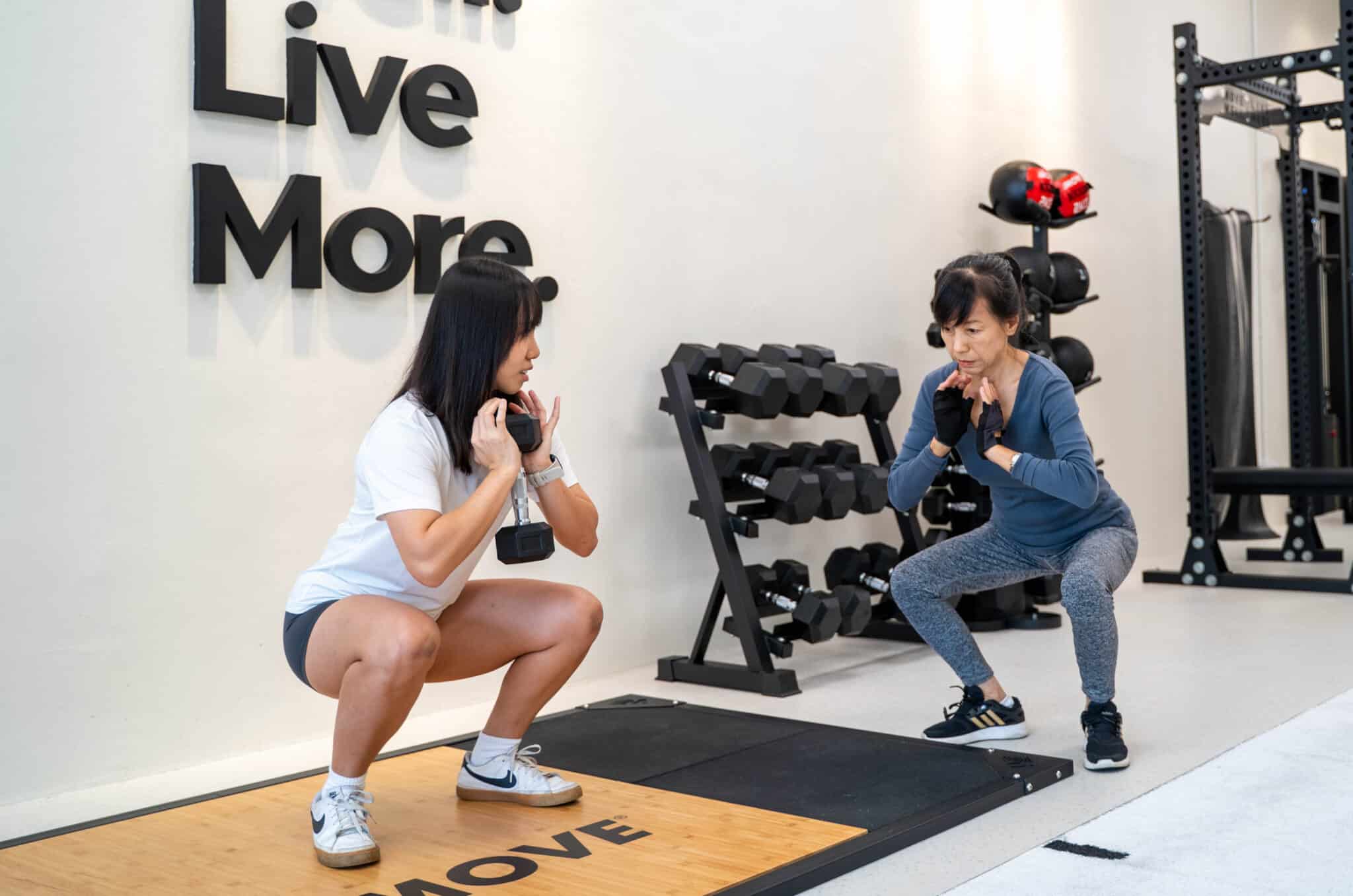
Starting with a thorough assessment is non-negotiable. A good coach working with this demographic wants to understand existing health conditions, medication, joint history, current activity levels and movement capacity before designing anything. What’s appropriate for a 65-year-old who has been active their whole life is different from what’s appropriate for someone starting from a sedentary baseline.
From there, the principles are consistent:
- movements that challenge the major muscle groups, progressed gradually;
- attention to balance and coordination alongside strength;
- training around existing conditions rather than ignoring them; and
- a programme built for consistency, not intensity.
Two sessions per week, sustained over months and years, produces results that are both measurable and meaningful in daily life.
What ‘meaningful in daily life’ actually means
The outcomes that matter for this group are rarely aesthetic. They’re functional:
- climbing stairs without getting breathless;
- getting up from the floor without assistance;
- carrying groceries without strain;
- maintaining the physical independence that allows full participation in the life they’ve built.
These outcomes don’t happen by accident. They’re the direct result of consistent, appropriate training that targets the specific physical qualities that decline with age. The clients who invest in this work in their 60s consistently describe the same experience: they feel stronger, more capable and more confident in their daily life in ways they didn’t anticipate when they started.
Private training is particularly well-suited to this group
The commercial gym environment can be poorly designed for older adults: heavy equipment that requires technique to use safely, a culture oriented toward younger demographics and little individual attention. Group classes often move at a pace that doesn’t accommodate individual physical histories or movement limitations.
Private training in a dedicated studio removes all of this friction. The session is prepared specifically for you. The coach’s full attention is on your form and your responses throughout. Progression is calibrated to what you can handle and what will genuinely develop your capacity — not to what the person next to you is doing.
A note for adult children considering this for a parent
Many of MOVE’s senior clients come through a referral from an adult child who recognised that their parent needed more than a gym membership and more than physiotherapy. If you’re in this position, the consultation process is designed to be comfortable and unhurried: it begins with a genuine conversation about where your parent is, what they’re comfortable with and what outcomes matter to them. There’s no pressure, no hard sell and no programme built before both the client and the family feel confident the fit is right.
What MOVE offers
MOVE Private Fitness works with clients across a wide age range, including a meaningful number of seniors and those approaching retirement who are making deliberate choices about how they age. Our coaches are trained to work within clinical histories, progress clients appropriately, and deliver sessions that are both effective and genuinely enjoyable. Many of our senior clients describe their sessions as the highlight of their week. That’s not incidental — it’s by design. Read what our clients say.
If you’re in your 60s or 70s and ready to invest in training that’s actually built for where you are — or if you’re thinking about this for a parent, come in for a free consultation at MOVE Singapore. Let’s start with a real conversation.