You’ve looked at the pricing. You know one-on-one private training is what you’d want, ideally. But there’s a quieter doubt underneath the price question: what if you sign up, pay for twelve weeks of dedicated coaching and stop going after six? You’ve done that before. The money isn’t the main thing — it’s the feeling of being another person who didn’t follow through.
Semi-private training is worth understanding if that’s where you are.
What semi-private training actually is
Semi-private training means training in a small group of two to three people with a dedicated coach. Unlike group classes, everyone in the session doesn’t follow the same programme. Each person has their own tailored plan. The coach manages the group by moving between clients, providing individual coaching cues and adjusting programming based on each person’s needs and responses.
This is categorically different from a group fitness class, where the instructor leads everyone through the same sequence regardless of individual needs, fitness levels or health considerations. In semi-private training, the small group is a context, not a constraint.
How it differs from one-on-one training
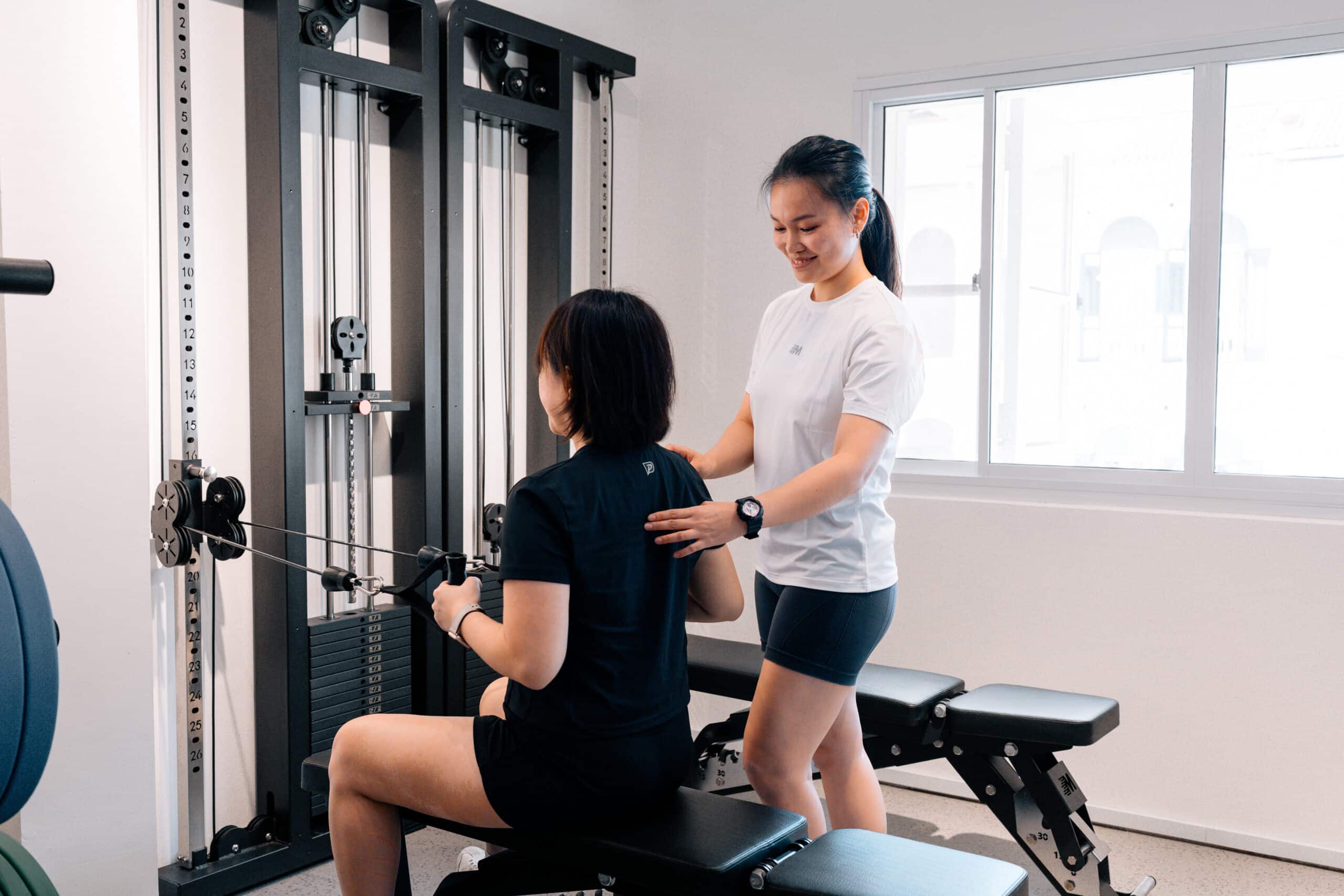
In a one-on-one session, the coach’s full attention is on you for the entire hour. Every rest period, every form check, every conversation happens with a single focus. This produces the highest level of precision and personalisation.
In semi-private training, the coach manages two to three clients simultaneously. Slightly less individual attention per person — but also lower cost per session, a different social dynamic that some people find motivating and a shared experience that creates accountability between training partners.
If you have complex movement issues, a significant injury history or goals that require continuous and precise coaching attention, one-on-one is worth the additional investment. If your goals are solid but don’t require constant supervision and you respond well to having other people around, semi-private often produces equivalent results at better value.
Who it actually works for — and who it doesn’t
Semi-private is often the right entry point for:
- people who’ve been inconsistent with solo training and want structured coaching but with a lower first commitment;
- couples or close friends who want to train together with individual programmes (not the same workout on two different bodies);
- professionals managing their fitness budget who want personalised coaching at a more accessible price point.
It’s typically not the right format for:
- people with acute injuries or very specific corrective needs;
- those with gym anxiety severe enough that any audience — even two other people — affects their performance; or
- those who need the full diagnostic attention of one-on-one to properly address complex physical history.
Semi-private at MOVE — how it works
At MOVE, semi-private sessions are capped at three clients. Clients are matched before they start: by goals, lifestyle and training history — rather than grouped arbitrarily. Your coach has prepared your programme in advance and tracks your progress across sessions, making real-time adjustments based on how you’re responding.
The social element is a genuine motivator for many people in this format. Knowing someone else is showing up creates an additional layer of accountability alongside the coach relationship. The shared effort — even when the programmes are different — builds a sense of connection over time.
The cost case
Semi-private training at MOVE typically costs 25–40% less per session than equivalent one-on-one coaching. For clients doing two to three sessions per week, that difference is meaningful across a year. It brings the MOVE coaching experience within reach for people who want private-studio quality but are working within a tighter budget — or who want to prove to themselves they’ll actually show up before committing to the full investment.
If you’re unsure whether one-on-one or semi-private is right for where you are, that’s exactly what the initial consultation is for. We’ll help you work out the right format — and if semi-private makes sense, we’ll match you to a training partner.